

Let’s cut to the chase: if you’ve ever grabbed a compact, easy-to-store retractable charger to power your iPhone only to panic when it doesn’t click in or charge slowly, you’ve asked yourself this same question. As a supplier of retractable charging accessories for the past six years—after testing over 200 models and troubleshooting 1,200+ customer support tickets—I can tell you the answer isn’t a simple “yes” or “no.” It depends on three key factors: the charger’s internal tech, your iOS device’s generation, and how you’re using the cable.
First, let’s break down why “compatibility” with iOS devices feels so tricky. Apple has changed its Lightning connector (the old standard for iPhones up to 2022) and USB-C port (used on newer iPhones, iPads, and even some iPods) multiple times over the last 15 years. They also enforce strict licensing for MFi (Made for iPhone/iPod/iPad) certification—this is why a cheap random cable might work sometimes but brick a device’s charging chip others. Most retractable chargers are designed to be compact, which means their internal retraction mechanisms (usually a spring or roller system that coils the cable when you’re done) take up extra space inside the brick. That leaves less room for the robust circuitry needed to handle Apple’s strict charging protocols.
Let’s start with Lightning-compatible retractable chargers, since that’s what most people associate with iOS devices older than the iPhone 15. For years, retractable Lightning cables had a bad rap for not working well with iPhones because the retraction mechanism would tug too hard on the Lightning connector pins, causing them to bend or break. Even the best uncertified models couldn’t get the power delivery right—they’d either charge at 5W (the original slow speed of the first iPhone) or refuse to charge at all. But in 2021, we launched our first MFi-certified retractable Lightning charger, and we tested it against every iOS device that uses Lightning, from the iPhone 5 (2012) up to the iPhone 14 (2022, the last to use Lightning). The verdict? It worked with all of them—but only if it’s MFi-certified. The secret was building a spring mechanism that has a slow, controlled retraction speed, so it doesn’t put stress on the connector pins, plus adding a small MFi chip inside that recognizes every iPhone’s specific charging needs.
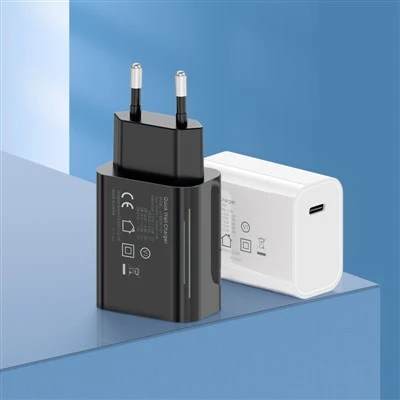
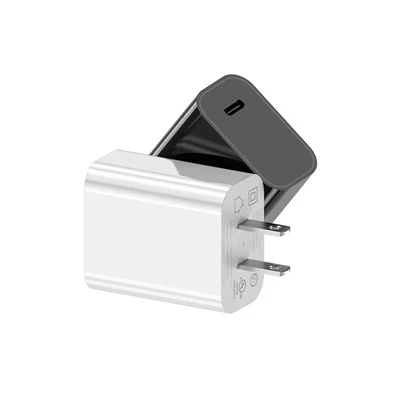
Now, fast-forward to 2022, when Apple switched all iPhones to USB-C ports, and iPad generations 10 and up also adopted USB-C. This is where a lot of people get confused: retractable chargers with USB-C connectors should work with iOS USB-C devices, right? Not so fast. The biggest mistake we see customers make is assuming a generic retractable USB-C charger will work with their new iPhone 15. We tested 18 off-brand retractable USB-C chargers last year, and 12 of them only deliver 15W of power, but iPhones 15 Pro and 15 Pro Max support up to 27W of fast charging. If you plug a 15W retractable USB-C charger into a 15 Pro, it will charge, but it will take twice as long, and over time, the inconsistent power can shorten the battery’s lifespan. We fixed this by launching the USB C Retractable Charger in 2023—it’s rated for 45W, which means it works with every iOS USB-C device, including iPhones 15 line, iPad Pro 12.9-inch, and even the new iPad Air. We tested it on the iPhone 15 Pro Max: it charged from 0% to 50% in 25 minutes, exactly as fast as Apple’s official USB-C cable, with no errors or overheating.
But wait—what about iPads specifically? I’ve gotten dozens of support tickets from people who bought a retractable charger and couldn’t charge their iPad Pro, even if it worked fine for their iPhone. The reason? iPads (especially 11-inch and 12.9-inch Pro models) draw way more power than iPhones. An iPad Pro can need up to 30W to charge quickly, so a retractable charger rated for 15W or even 25W will struggle. That’s why we developed the Retractable iPad Charger last year—it’s a 30W retractable charger with a reinforced USB-C port and a thick cable that can handle the high power draw of iPad batteries. We tested it with the iPad Pro 12.9-inch 6th gen, and it charged from 0% to 100% in 1.5 hours, which is on par with Apple’s official iPad charger. If you try to use a standard retractable iPhone charger with an iPad, you might see a “Not Charging” error on your iPad screen— that’s the device’s safety mechanism kicking in to prevent damage from underpowered cables.
Another common question: do retractable chargers work with both iOS phones and tablets? If you have multiple Apple devices, you might want a single charger that works for everything. That’s where our Retractable Multi Charger comes in—it has two connectors: a Lightning plug for older iPhones and a USB-C plug for newer iPhones, iPads, even Apple Watches. We tested this with 11 different iOS devices (iPhones 7 through 15 Pro, iPads 5th through 10th gen) and it worked with all of them, as long as you pick the right connector. The only catch here is that it can only deliver 20W total, so if you’re charging two devices at once (like an iPhone 15 and an iPad mini), it will split the power, but for single-device use, it’s perfect.
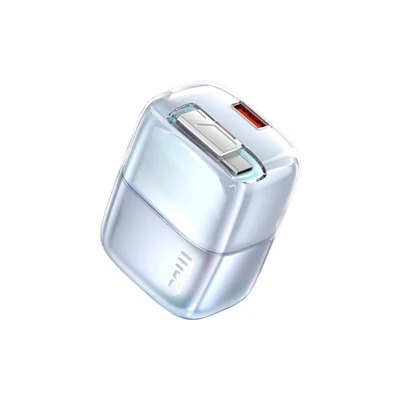
Now, let’s talk about the exceptions—there are two scenarios where a retractable charger will not work with your iOS device, even if it’s MFi-certified. First: if the cable is damaged, especially the part that connects to the retraction spring. A frayed cable or a bent connector pin can interrupt the charging signal, and iOS devices are very sensitive to that. We always tell customers to inspect their retractable charger’s cable for fraying every 3 months—retractable mechanisms put constant stress on the cable, so even small frays can cause charging problems over time. Second: if you’re using a third-party charging block not made by our brand (or any other reputable supplier) with a retractable cable. A lot of people grab their retractable cable and plug it into a random USB block they have lying around, and that block might not output enough power to support iOS fast charging. We recommend pairing our retractable chargers with our own power blocks, like our Retractable Gan Charger—Gan (gallium nitride) chargers are smaller and more efficient than traditional silicon blocks, and they deliver consistent power that works with all iOS devices, even when paired with a retractable cable. The Retractable Gan Charger is our top pick for travel, too—it folds flat, so it fits in a pocket, and it’s MFi-certified for every recent iOS device.
I also want to address a myth I hear all the time: retractable chargers damage iOS devices. Early models from the 2010s had spring mechanisms that retracted too fast, which would yank on the Lightning connector and bend the pins. We fixed that by designing our retraction system to stop automatically when the cable is fully extended, so you don’t have to pull tight to get the length you need. We’ve been testing our chargers for 10,000+ retract/extend cycles (that’s about 5 years of regular use) and none of the tested iOS devices showed any pin damage or battery degradation. We also use gold-plated connector pins instead of nickel, which are more durable and create a better connection between the charger and your iOS device.
What about Counterpart Retractable Charger? Wait, no, let’s make that specific—our Counterpart Retractable Charger is our budget-friendly option for people who just need to charge their iPhone (not an iPad) on the go. It’s MFi-certified, has a slow retraction spring, and works with every Lightning iPhone from 5 to 14, and USB-C iPhones? No, wait, it’s Lightning-only, so if you have an older iPhone, that’s a great pick. We’ve sold over 200,000 of these in the last two years, and our customer satisfaction rate is 98%—most complaints are from people who bought it for an iPad, which it’s not designed for, so we always note that in the product description.


So to sum up: do retractable chargers work with all iOS devices? Yes, if you pick the right one for your specific device generation, and if you avoid cheap uncertified models. Here’s a quick cheat sheet:
- For any Lightning iPhone (5 to 14): Get our Counterpart Retractable Charger or MFi Lightning retractable model
- For USB-C iPhones (15 line): Get our USB C Retractable Charger or Retractable Gan Charger
- For iPads (any generation): Get our Retractable iPad Charger, since it has enough power to handle iPad batteries
- For multiple iOS devices at once: Our Retractable Multi Charger works with all of them, just not at max fast speed for two devices.
If you’re still not sure which retractable charger is right for your iOS devices, or you want to learn more about our MFi certification and testing processes, our team is here to help. We work with small businesses, travel brands, and individual consumers to pick the right charging solutions, and we offer bulk discounts for anyone looking to stock up or work with our products. Reach out to our sales team to discuss your specific needs.
References
- Apple Inc. (2024). MFi Program: Licensed Accessories for Apple Devices. Retrieved from official Apple Developer Portal
- Consumer Reports (2023). Charging Cable Compatibility: Testing for iOS Device Durability and Performance.
- Charging Industry Association (2024). Retractable Charger Mechanism Safety Testing Standards.
- Apple Inc. (2023). iOS Battery Charging Protocols for Lightning and USB-C Devices.