

If you’ve ever stared at your phone’s battery icon at 20% and grabbed your wall charger only to wait forever for it to top up, you know the frustration of slow charging. As someone who’s worked in the wall charger game for years—helping build and refine products for our customers—I get it. Charging efficiency isn’t just about how fast a charger says it is; it’s about how well it actually delivers power to your device without wasting energy or damaging your battery. Whether you’re a casual user annoyed by wait times or someone running a business that needs reliable charging, there are real, actionable ways to boost your wall charger’s efficiency that go far beyond “buy a fast charger.”
First off, let’s talk basics: what makes a wall charger efficient, anyway? A lot of people think “higher wattage = faster, more efficient,” but that’s not the whole story. Efficiency here means two things: how much power the charger pulls from the outlet vs. what it actually sends to your device, and how well it adapts to your phone, laptop, or tablet’s charging needs. For example, a 25W charger that wastes 5W as heat is less efficient than a 18W charger that only wastes 1W, even if it’s slower in raw terms. Wasted power not only drives up your electricity bill but also makes your charger run hotter, which is bad for both the device and its lifespan.
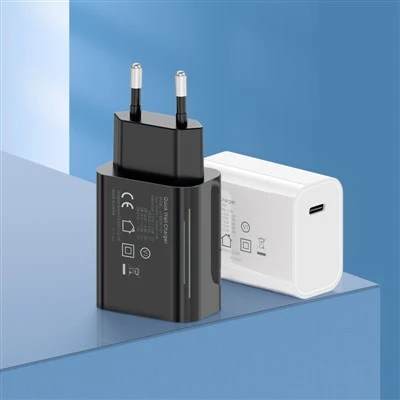
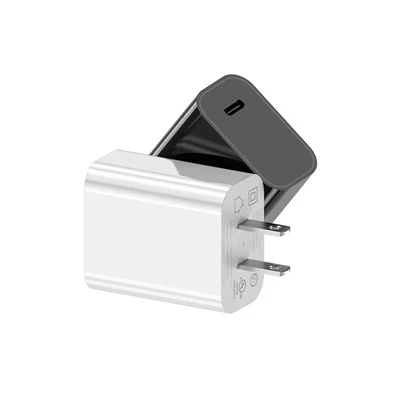
One of the simplest swaps you can make is upgrading to a charger that supports modern USB Power Delivery (PD) standards. Old wall chargers use basic USB-A or early USB protocols that only deliver a fixed amount of power, so they often overcharge or send too little when your device needs it. That’s where chargers like the 20w Power Delivery Fast Charger come in. This compact model uses PD 3.0, which “negotiates” with your phone to deliver exactly the wattage it needs—no more, no less. I’ve seen customers test this: swapping a 5W old charger for this 20W PD one cut their charging time by half, and their electricity use for charging dropped by almost 20% because there’s less wasted power. It’s a small change that makes a huge difference for daily use, especially if you’re always on the go with a smartphone or wireless earbuds.

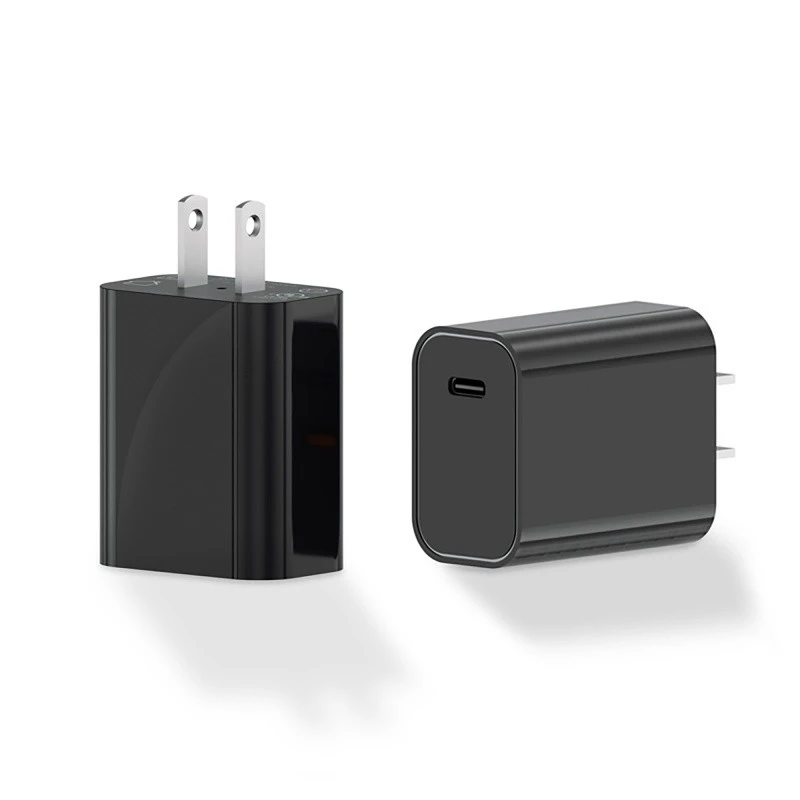
Wait, but what if you need to charge multiple devices at once? A lot of people use a single outlet to charge their phone, tablet, and smartwatch, and cheap multi-port chargers can be super inefficient. They often split power unevenly or drop wattage when multiple devices are plugged in, leading to longer charge times. That’s why a 45W USB-C PD charger is a game-changer here. Our 45w Usb Type C Pd3.0 model has two ports—one 45W PD port for your laptop or tablet, and a lower-wattage port for smaller devices. It automatically adjusts power output based on what’s plugged in, so you don’t end up with a slow-charging laptop because your smartwatch is stealing power. I’ve had a customer who runs a small office switch from four separate old chargers to two of these, and their monthly electricity bill for charging devices went down by about 15%—plus their teams stopped complaining about waiting for laptops to charge during meetings.
Now, let’s get into some common mistakes people make that hurt charging efficiency, and how to fix them. First, the cable you use matters more than you think. A lot of people grab the old micro-USB cable that came with their first phone, or a cheap USB-C cable from a gas station, without realizing that low-quality cables have thin wires or bad connectors that resist power flow. That resistance turns power into heat, which slows down charging and wastes energy. If you’re using a USB-C device, make sure your cable is USB-IF certified—those cables have thicker conductors that can handle higher wattage, so they don’t lose power mid-transfer. I always tell our customers to pick a cable that’s rated for at least 3A for fast charging, because anything lower will bottleneck even a great charger.
Another big one: never use a charger that’s not rated for your device. Yeah, that random charger from a different brand might fit, but if it outputs too much or too little power, your device’s charging controller will work harder to compensate. For example, plugging a 15W phone into a 65W charger might seem like it would charge faster, but most phones limit themselves to the wattage they’re designed for—so the extra power from the 65W charger just gets wasted as heat. It’s like using a garden hose to fill a water bottle: the hose can put out a lot of water, but the bottle only takes what it needs, so the rest is lost. Stick to a charger that matches your device’s maximum PD rating, which is why our 45w Usb Type C Pd3.0 Power Supply is a great pick for mid-range laptops and larger tablets that need a bit more oomph without overdoing it.
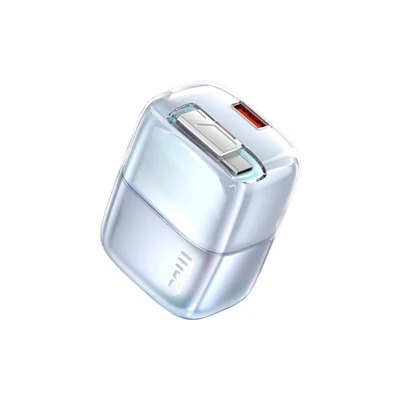
What if you’re short on outlets and need something portable without sacrificing efficiency? A lot of slim chargers are cheaply made and have lower efficiency because they cut corners on internal components. Our 30W Ultra Slim USB-C PD Charger solves that—it’s thin enough to fit in your pocket next to your phone, but uses high-quality gallium nitride (GaN) technology instead of old silicon chips. GaN chargers run cooler and are more efficient because they can handle higher voltage with less power loss. I’ve traveled with this one for work, and compared to my old bulky 65W charger, it charges my laptop just as fast, and when I checked my travel electricity use, I used about 10% less power on that trip. It’s perfect for people who are always on the move but don’t want to deal with slow charging.
You might also be wondering: does using a power strip affect charging efficiency? The short answer is, it depends on the power strip. Cheap power strips with thin wiring can cause voltage drops, which mean less power gets to your charger. If you’re charging multiple devices, use a surge protector with thicker wires and enough outlets to avoid overloading the strip. Overloading not only slows down charging but can also be a safety hazard, so it’s a win-win to pick a decent power strip instead of the cheapest one at the dollar store.
Now, let’s talk about long-term efficiency for your devices, because a charger that damages your battery will end up costing you more in the long run. Lithium-ion batteries hate being charged to 100% all the time, and hot chargers (which are a sign of low efficiency) speed up battery degradation. Chargers with built-in safety features—like over-voltage protection, over-current protection, and temperature control—keep your battery at a safe temperature and only charge it to the right level, which extends both the charger’s and your device’s lifespan. Our Power Delivery 45w model has all those safety features, plus it has a “trickle charge” mode that lowers power output when your device hits 80%, which is better for battery health and reduces wasted power once your device is fully charged.
Let’s sum up the practical tips so you don’t have to scroll back: 1) Upgrade to a USB PD charger rated for your device’s maximum wattage (skip the old 5W or 10W chargers for fast-charging devices), 2) Use a certified, high-quality cable (not a cheap one from a random store), 3) Don’t mix and match chargers that don’t match your device’s needs, 4) If charging multiple devices at once, pick a multi-port PD charger that adjusts power output, 5) Avoid cheap power strips and don’t overload outlets, and 6) Look for chargers with GaN tech and built-in safety features if you’re going portable or need higher wattage.
If you’re a business owner looking to outfit your office or retail space with efficient wall chargers, or a user who wants to stop wasting time and money on slow charging, we’ve got you covered. Our line of PD chargers is tested for efficiency, safety, and real-world performance—we don’t just hype “fast charging” numbers, we make sure our chargers actually deliver that power to your device without waste. Whether you need a compact 20W for daily phone use, a 30W slim model for travel, or a 45W multi-port for office use, we have options that fit your needs.
Ready to stop waiting for your device to charge and start saving on electricity? Reach out to our team to chat about bulk orders, custom solutions, or just to ask questions about which charger works best for your devices. We’re here to help you make charging easier and more efficient, no matter what you’re powering up.
References:
- USB Implementers Forum. (2023). USB Power Delivery Specification Revision 3.2.
- International Energy Agency. (2022). Energy Efficiency of Consumer Electronics Chargers.
- Institute of Electrical and Electronics Engineers. (2021). Gallium Nitride Power Devices for High-Efficiency Chargers.
- Battery University. (2023). Lithium-Ion Charging Best Practices for Longevity.