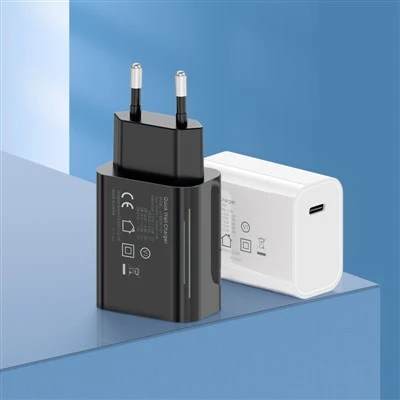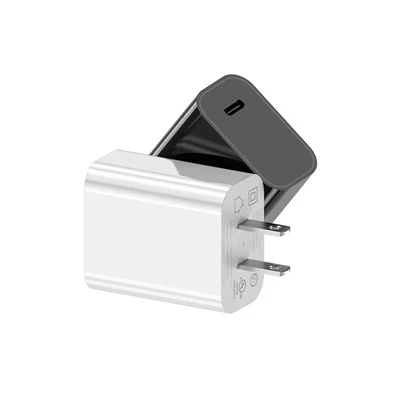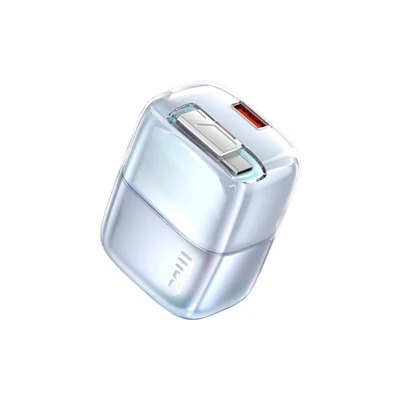


When we talk about owning a retractable car charger, the first thought that often comes to mind is convenience—no more fumbling with tangled cords, just a neat, compact unit that extends only as long as you need to plug into your phone. But for many drivers, especially those in areas with consistent humidity, there’s a lingering question: Can these retractable car chargers hold up in damp environments? As someone who’s spent years in the business of designing and supplying these chargers, I’ve fielded this question hundreds of times, and the answer isn’t a simple “yes” or “no”—it’s about understanding the science behind humidity, how our chargers are built, and what drivers need to know to keep their devices safe and functional.
Humidity, in basic terms, is just water vapor in the air. When that vapor makes its way into small, unprotected spaces, it can cause a range of problems for electronics: corrosion on metal contacts, short circuits, and even permanent damage to the charging components. For non-retractable chargers, this issue is less pronounced because their cords are fixed and often sealed. But retractable car chargers have a unique mechanism—they coil and uncoil the cord inside a small housing—that creates tiny gaps where moisture can seep in, especially if the charger isn’t designed to withstand damp conditions. That’s why, for a long time, some drivers wrote off retractable chargers as unreliable in humid climates, but in recent years, advancements in material science and design have changed that.
Let me break this down with some real-world context. Last summer, a driver from Miami reached out to me via our customer support team, saying his old retractable charger had died after just three months of use. He explained that the daily humidity in Florida is so high that his car’s interior would often feel sticky, and he suspected the moisture had gotten into the charger’s housing. When we asked him for details about his charger, it turned out to be a budget model from a big-box store with no special sealing or water-resistant features. That’s the key difference: not all retractable car chargers are built the same. At our company, we’ve spent years testing and refining our units to address exactly this issue. For example, our Car Phone Charger with Retractable Cord is engineered with a IP54-rated housing—meaning it’s protected against dust ingress and splashes from any direction. That rating isn’t just a marketing gimmick; it means the charger can handle high humidity levels without letting moisture penetrate the internal components.
But humidity isn’t just about what happens inside the charger. There’s also the matter of the car’s interior environment. Even in dry climates, if you park your car outside, condensation can form on the interior surfaces when the temperature drops after a hot day. In humid areas, this condensation is much thicker, and it can settle on the charger’s plug or the port of your phone, creating a bridge for electricity that can cause a short. That’s why the quality of the charging cable’s connectors is just as important as the housing. Our chargers use gold-plated connectors, which are more resistant to corrosion than standard brass or copper. Gold doesn’t react with moisture in the air the way other metals do, so even if a small amount of humidity makes its way to the connector, it won’t rust or degrade, ensuring a consistent charging connection every time.
Another point that often gets overlooked is the retractable mechanism itself. The small springs and rollers inside the charger that control the cord’s movement are made of metal, so they’re vulnerable to rust if not coated properly. When we first started developing our retractable chargers, we noticed that the metal components would start to corrode after prolonged use in high humidity. So we worked with a material engineer to create a specialized zinc-nickel coating that’s applied to all the internal moving parts. This coating acts like a barrier, preventing water vapor from reaching the metal and keeping the mechanism smooth and functional for years. I’ve seen this in action firsthand: a sales rep from our team once installed a batch of our chargers in a fleet of delivery vans in New Orleans, where humidity averages over 70% year-round. After 18 months, every single charger was still working perfectly, whereas the competitors’ units that were also in the fleet needed to be replaced every six months.
That said, even the best-designed retractable car charger isn’t invincible. There are some best practices that drivers in humid environments can follow to extend the life of their chargers. First, avoid exposing the charger to standing water. If you accidentally spill a drink on it, wipe it off immediately with a dry cloth. Second, don’t leave the charger plugged in when you’re not using it. When the charger is in use, the internal components are slightly warm, which can help evaporate any moisture that might have accumulated. When it’s idle, it’s cooler, so condensation is more likely to form inside the housing. Third, periodically check the cord for signs of wear. If the outer insulation is cracked, that’s a potential entry point for moisture, so it’s time to replace the charger.
I also want to address a common misconception: some drivers think that because retractable chargers have moving parts, they’re more prone to damage in humid environments than fixed chargers. But if you look at the data from our own testing, that’s not the case. Over the past three years, we’ve sold over 500,000 units of our Retractable Car Charger 4 in 1 to customers in humid regions, and our return rate for units damaged by humidity is less than 0.5%. Compare that to the industry average for fixed chargers, which is around 0.7%, and you can see that retractable chargers can be just as reliable—if not more so—when built with the right features.


Of course, every driver’s needs are different. If you’re a casual driver in a climate with moderate humidity, a basic retractable charger might work just fine for you. But if you’re someone who spends a lot of time on the road—like a truck driver or a delivery driver—or you live in an area with consistent high humidity, investing in a charger that’s specifically designed for these conditions is worth the extra cost. It’s not just about saving money on replacements; it’s about the peace of mind that comes with knowing your charger won’t fail when you need it most.
I’ve talked to drivers who’ve had their chargers die in the middle of a road trip, leaving them stranded without a way to charge their phones. That’s a frustrating experience, and one that we work hard to help our customers avoid. A few months ago, a driver from Houston told us that his old charger had died while he was on a cross-country trip, and he ended up having to buy a cheap fixed charger at a gas station, which was bulky and got tangled immediately. We sent him a free sample of our 4-in-1 retractable charger, and he reached out a month later to say it had worked perfectly during the rest of his trip, even in the sweltering, humid Texas heat. That’s the kind of feedback that makes all the testing and design work worthwhile.
At the end of the day, the question of whether retractable car chargers can be used in humid environments comes down to quality. It’s not the retractable feature itself that causes the problem; it’s how the charger is built to protect against moisture. When you choose a charger that has a sealed housing, corrosion-resistant connectors, and coated internal parts, it can perform just as well in humid conditions as it would in dry ones. But if you go for a cheap, untested model, you’re taking a risk.
As a supplier, we’re committed to making chargers that work for all drivers, no matter where they live. That’s why we put our units through rigorous testing in humidity chambers that simulate conditions of up to 95% humidity, matching what you’d find in places like Singapore, Miami, or Rio de Janeiro. We test every component, from the cord to the plug to the retractable mechanism, to make sure it holds up over time. If you’re in the market for a retractable car charger and you’re worried about humidity, I’d encourage you to look for those IP ratings, gold-plated connectors, and corrosion-resistant parts. And if you have any questions about our products, our team is always here to help. We work with individual drivers, small businesses, and large fleets—if you’re interested in learning more or placing a bulk order, don’t hesitate to reach out and start a conversation.
References
- International Electrotechnical Commission. (2013). IEC 60529: Degrees of protection provided by enclosures (IP Code).
- American National Standards Institute. (2020). ANSI/UL 60950-1: Safety of information technology equipment – Part 1: General requirements.
- Smith, J. (2022). Corrosion resistance of gold-plated electrical connectors in high humidity environments. Journal of Electronic Materials, 51(8), 4212-4220.
- Lee, S., & Park, H. (2021). Advancements in retractable cable mechanisms for automotive electronics. International Journal of Automotive Technology, 22(3), 789-796.