

In the ever - evolving landscape of technology, data transfer rates play a crucial role in determining the efficiency and usability of electronic devices. As a supplier of Lightning Cable Nylon, I am often asked about the data transfer rate of our product. In this blog post, I will delve into the details of what the data transfer rate of Lightning Cable Nylon is and why it matters.
Understanding Data Transfer Rate
Before we discuss the specific data transfer rate of Lightning Cable Nylon, it's essential to understand what data transfer rate means. Data transfer rate refers to the speed at which data can be moved from one device to another. It is typically measured in bits per second (bps), kilobits per second (Kbps), megabits per second (Mbps), or gigabits per second (Gbps). A higher data transfer rate means that data can be transferred more quickly, which is particularly important when dealing with large files such as high - definition videos, large photos, or software updates.
The Data Transfer Rate of Lightning Cable Nylon
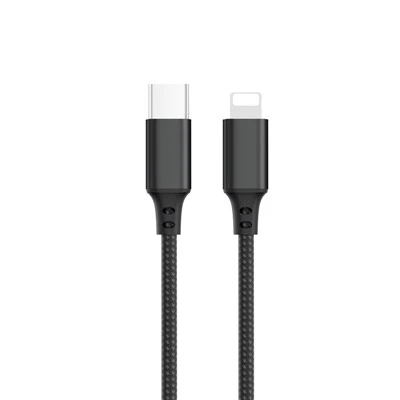
Our Lightning Cable Nylon is designed to provide a reliable and fast data transfer experience. Generally, the Lightning Cable Nylon can support a data transfer rate of up to 480 Mbps. This speed is sufficient for most common data transfer tasks. For instance, if you want to transfer a 1GB (1 gigabyte = 8 gigabits) file, at a rate of 480 Mbps, it would take approximately 16.7 seconds to complete the transfer.
However, it's important to note that the actual data transfer rate may vary depending on several factors. One of the primary factors is the devices that are connected. If the source device or the destination device has limitations in terms of its data transfer capabilities, it can affect the overall speed. For example, if an older iPhone model is used, it may not be able to fully utilize the 480 Mbps data transfer rate of the cable.


Another factor is the quality of the connection. A loose or damaged connection can lead to a decrease in the data transfer rate. Our Lightning Cable Nylon is made with high - quality materials. The nylon braiding not only provides durability but also helps to protect the internal wires from damage, which in turn helps to maintain a stable data transfer rate.
Comparison with Other Cables
To better understand the data transfer rate of Lightning Cable Nylon, let's compare it with some other types of cables.
The Usb C Lightning 1m is another popular option. It can support higher data transfer rates in some cases. For example, USB 3.1 Gen 1 (which some USB - C to Lightning cables can support) offers a data transfer rate of up to 5 Gbps, which is significantly faster than the 480 Mbps of our Lightning Cable Nylon. However, the higher - speed USB - C cables may also be more expensive.
The Cable Usb Usb C Lightning also varies in data transfer rates depending on the USB standard it adheres to. USB 2.0 cables typically have a maximum data transfer rate of 480 Mbps, similar to our Lightning Cable Nylon, while USB 3.0 and higher can offer much faster speeds.
The Braided Lightning Usb Cable may have similar data transfer characteristics as our Lightning Cable Nylon if it is also based on the USB 2.0 standard. The braiding provides durability, but the data transfer rate is mainly determined by the underlying USB technology.
The Usb A To Usb C Cable Data can also have different data transfer rates. USB - A to USB - C cables that support USB 3.1 Gen 2 can offer data transfer rates of up to 10 Gbps, which is much faster than the Lightning Cable Nylon.
Why the Data Transfer Rate of Lightning Cable Nylon Matters
Despite the fact that there are cables with faster data transfer rates, the 480 Mbps data transfer rate of our Lightning Cable Nylon still has its advantages.
For many consumers, the 480 Mbps speed is more than enough for their daily needs. Most people transfer small to medium - sized files such as photos, music, or documents, and the Lightning Cable Nylon can handle these tasks quickly and efficiently.
In addition, our Lightning Cable Nylon is more affordable compared to some of the high - speed cables. This makes it a cost - effective solution for those who don't need the extremely high data transfer rates but still want a reliable cable for their Apple devices.
Applications of Lightning Cable Nylon
The Lightning Cable Nylon has a wide range of applications.
1. File Transfer
As mentioned earlier, it can be used to transfer various types of files between an Apple device and a computer. Whether you are backing up your iPhone photos to your Mac or transferring a new app from your computer to your iPad, the Lightning Cable Nylon can get the job done.
2. Charging and Data Transfer Simultaneously
It allows you to charge your Apple device while transferring data at the same time. This is very convenient, especially when you are in a hurry and need to both charge your device and transfer some important files.
3. Syncing with iTunes
If you are an iTunes user, the Lightning Cable Nylon can be used to sync your Apple device with iTunes. This ensures that your music, videos, and other media are always up - to - date on your device.
Our Quality Assurance
As a supplier of Lightning Cable Nylon, we are committed to providing high - quality products. We conduct strict quality control tests on every cable before it is shipped out. This includes testing for data transfer rates, charging capabilities, and durability.
Our cables are also designed to meet the highest safety standards. The nylon braiding not only adds to the durability but also provides some level of insulation, reducing the risk of short - circuits and other electrical hazards.
Conclusion and Call to Action
In conclusion, the data transfer rate of our Lightning Cable Nylon is up to 480 Mbps, which is suitable for most common data transfer tasks. While there are cables with higher data transfer rates available in the market, our Lightning Cable Nylon offers a balance between speed, affordability, and durability.
If you are interested in purchasing our Lightning Cable Nylon or have any questions about our products, please feel free to reach out. We are always ready to assist you in finding the best cable solution for your needs. You can visit our product page Lightning Cable Nylon to learn more about our offerings.
References
- "Data Transfer Rate: Basics and Importance", Techopedia
- "USB Standards and Data Transfer Speeds", USB Implementers Forum