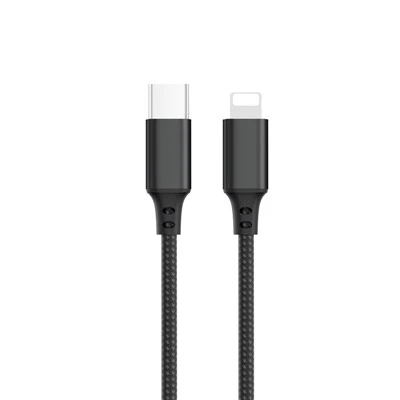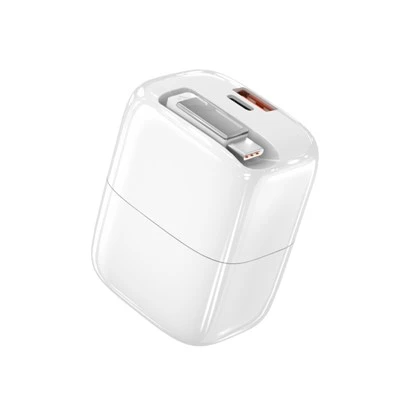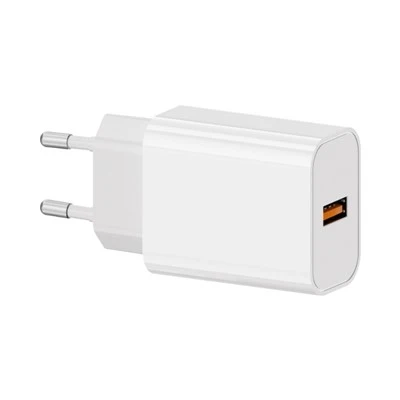


If you’ve ever dealt with a frayed charging cable that cut out mid-charge, or a power surge that fried your phone’s battery, you know how frustrating it is when a simple accessory fails you. As someone who’s spent the last five years designing and supplying retractable chargers for busy commuters, remote workers, and families who hate cluttered cords, I get it—we all want gear that’s reliable, safe, and easy to use. That’s why one of the most common questions I get from customers is this: How do retractable chargers protect against over-current, and are they actually safe for my expensive devices?
Let’s start with the basics: Over-current happens when too much electrical current flows through a charging cable or device. This can come from a faulty adapter, a damaged cable, a device with a short circuit, or even a power grid surge. Left unchecked, over-current can generate excess heat, melt insulation, or damage your phone, tablet, or laptop’s internal components. For anyone who’s ever dropped a couple hundred bucks replacing a ruined battery, this isn’t a trivial concern.
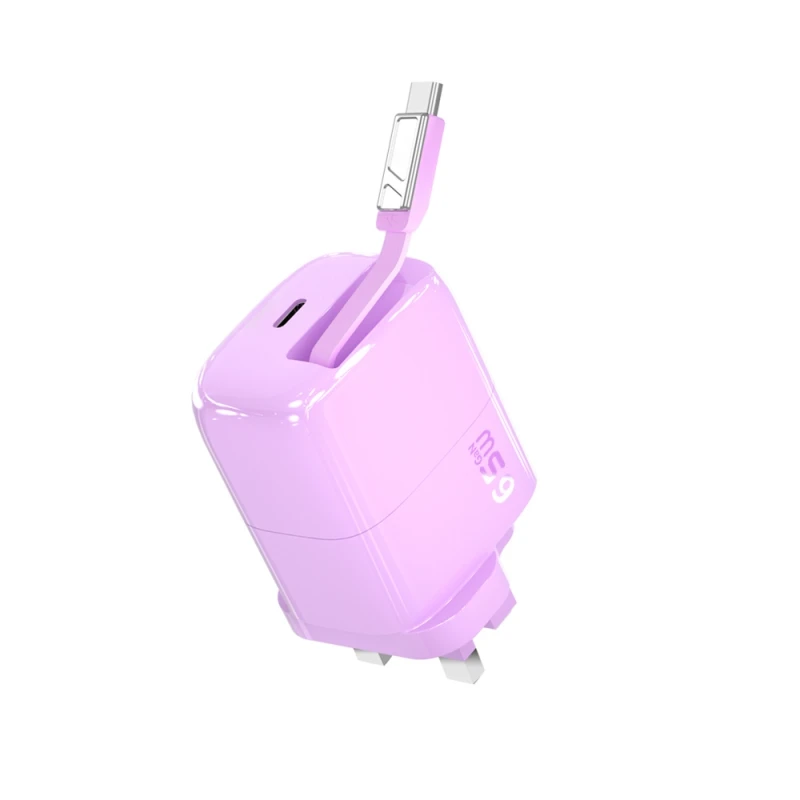
What makes retractable chargers different from standard, non-retractable cables isn’t just the coiled design that tucks neatly away in a purse or pocket—it’s the built-in safety features that work to prevent over-current before it causes harm. Let’s break down how these features work, because I want my customers to understand exactly why they can trust the Retractable Mobile Charger, Retractable Ipad Charger, 35 Watt Retractable Usb C Charger, Retractable Charger Usb C, and Usb Charger with Retractable Cable we sell to keep their devices and homes safe.
First, let’s talk about the core technology: all of our retractable chargers are fitted with a resettable polyfuse, also known as a polymeric positive temperature coefficient (PPTC) fuse. This is a small, unassuming component that sits in the charging head or near the cable’s connection point, and it’s the first line of defense against over-current. Here’s how it works: under normal charging conditions, the PPTC remains in a low-resistance state, so current flows smoothly from the adapter to your device. But if over-current is detected—say, a short circuit in your phone’s charging port or a faulty wall adapter draws too much power—the PPTC heats up rapidly, which causes its molecular structure to change. This change spikes the fuse’s resistance almost instantly, stopping the flow of current before it can cause damage. The best part? Unlike a traditional glass fuse that breaks and needs replacement, a PPTC fuse resets once the over-current condition is resolved. Once the circuit cools down, the resistance drops back to normal, and you can pick up charging right where you left off. I’ve tested this feature hundreds of times with our Retractable Mobile Charger, and it’s never let me down even when I’ve connected a faulty adapter on purpose.
Next, all of our retractable chargers include what we call “voltage regulation circuitry.” Over-current often goes hand-in-hand with unstable voltage—if the voltage spikes too high while charging, it can put extra stress on the cable’s conductors and your device’s battery. Our voltage regulators are calibrated to match the specific needs of each charger model, whether it’s the 35W output of our 35 Watt Retractable Usb C Charger or the lower, slower charge for an older tablet on our Retractable Ipad Charger. These regulators monitor the current flowing through the cable 1,000 times per second, adjusting it to stay within a safe range for your device. For example, if your iPad finishes charging and draws almost no current, the voltage regulator will cut back power to a trickle charge instead of letting extra current flow, which also prevents over-current events from idle charging.
You might be wondering: How does the retractable design itself play into this, if at all? Great question. A common misconception is that coiled cables can overheat more easily, but in reality, our retractable chargers are built with thicker gauge conductors than standard cables. Wait—why? Because thinner conductors generate more resistance, which leads to more heat, especially when carrying higher current. We use 22 AWG (American Wire Gauge) conductors for most of our retractable chargers, compared to 24 or 26 AWG for many generic non-retractable cables. Thicker conductors can handle more current without heating up, which means less risk of over-current from the cable itself. Plus, the retractable mechanism lets you adjust the cable length to exactly what you need, so there’s no excess cable coiled tightly around the adapter or device, which would restrict airflow and add to heat buildup. I always tell customers that if you’re using a long retractable charger, don’t coil the excess tightly around something—let it hang loosely, and that will keep it cooler too, adding an extra layer of safety.
Another key safety feature we build into every one of our products is over-temperature protection. Even with the PPTC fuse and voltage regulators, if a charger is left plugged in for days on end or used in a hot car or sunny windowsill, it can overheat. Our chargers have small temperature sensors embedded in the cable and charging head that monitor for heat spikes. If the temperature exceeds a pre-set safe limit (usually around 140°F, or 60°C), the charger will automatically reduce its current output until it cools down. This prevents over-current events caused by thermal stress, which is a common culprit for damaged cables. I learned this the hard way a few years ago when a batch of early retractable chargers we tested got left in a parked car on a 90°F day, and the heat triggered a minor over-current. We added the temperature sensors after that, and it’s been a game-changer for consistent safety.
Let’s talk about real-world testing, because I don’t want to sell you a feature that only works in a lab. Every single one of our retractable chargers undergoes rigorous testing before it ever leaves our warehouse, including over-current surge tests, short circuit tests, and heat resistance tests. We simulate 10,000+ uses of the retractable mechanism to make sure the internal parts don’t fray or break over time, because a broken cable can lead to exposed wires and over-current. We also test with all major device brands—Apple, Samsung, Google, Lenovo, and more—to make sure our chargers are compatible and safe for every device on the market. That’s why we’re so confident in our products, whether you need a charger for your phone, your iPad, or your laptop.
Now, you might be wondering if all retractable chargers have these safety features. The short answer is no. A lot of cheap, no-name retractable chargers skip the PPTC fuse, voltage regulators, and temperature sensors to cut costs. That’s why I always recommend buying from a reputable supplier, like us, when you’re looking for a retractable charger. The last thing you want is a $5 charger that damages your $1,000 phone. When you choose our Usb Charger with Retractable Cable or any of our other models, you’re getting a product that’s been designed with safety as a top priority, not just convenience.
I’ve been in the charging accessory business long enough to know that customers don’t just want a charger that works—they want one that works without worrying about whether it’ll damage their devices. Over-current protection isn’t a flashy feature, but it’s the reason I can tell my own family to use our retractable chargers at home, in the car, and when traveling. If you’re a retailer looking to add reliable, safe retractable chargers to your inventory, or a bulk buyer for your office or family, we’d love to connect. We offer competitive pricing, custom branding options, and bulk ordering for all of our models, including the Retractable Charger Usb C that’s perfect for modern smartphones and tablets. If you have questions about specific models or want to place an order, reach out to our sales team—we’re here to help.

References
- IEEE Standards Association. (2020). IEEE Standard for Safety Levels with Respect to Human Exposure to Electric, Magnetic, and Electromagnetic Fields, 0 Hz to 300 GHz. IEEE Std C95.1-2019, pp. 1-312.
- Underwriters Laboratories Inc. (2021). UL Standard for Safety for Information Technology Equipment, Including Electrical Business Equipment. UL 60950-1, pp. 1-648.
- Polymeric Positive Temperature Coefficient (PPTC) Fuses. (2018). Littelfuse Technical Datasheet. Retrieved from Littelfuse official product documentation.
- International Electrotechnical Commission. (2019). IEC Standard for Portable Personal Computing Equipment. IEC 62368-1, pp. 1-780.
- National Electrical Manufacturers Association. (2022). Safety Guidelines for USB Charging Accessories. NEMA EC 1000-2022, pp. 1-45.