

If you’ve ever found yourself grabbing for a charging cable that’s frayed at the base, doesn’t hold a charge, or dies halfway through syncing your phone, you know how frustrating it is to replace one more accessory. As someone who’s spent years as a charging cable supplier, I’ve seen firsthand how many customers assume “a cable is just a cable” — but the truth is, dozens of small, often overlooked factors add up to make the difference between a cable that lasts two months and one that holds strong for three years. Today, I’m breaking down the science behind why some charging cables outlast others, plus what to look for when you’re shopping for a reliable option.
First, let’s talk about the most common culprit for premature cable death: physical damage. Most of us treat our cables like an afterthought. We yank them out of wall adapters, twist them around our bags like old garden hoses, and sit on them while they’re charging. But the point where a cable bends where it connects to the connector (that’s called the strain relief) is the weakest spot. Inside every charging cable, there are tiny, delicate wires — usually copper, since it’s the most conductive and affordable material for this use — that carry power and data from one end to the other. Every time you bend that strain relief, those wires flex and weaken. Over time, the copper strands crack, fray, or break entirely, which is why your cable might start charging slowly or stop working altogether.
Not all strain relief is created equal, though. I’ve tested cheap cables that use thin, plastic shrink wrap as strain relief — that’s basically like wrapping a piece of paper around a bend point. After a month of regular use, that plastic splits, and the wires underneath are exposed. Higher-quality cables, on the other hand, use either thick, molded plastic strain relief that’s built to flex (not split) or even reinforced fabric around the base of the connector. For example, many of the braided cables we carry, like the Braided Usb A To Usb C Cable, have double-layered strain relief that can handle thousands of bends without breaking. We’ve put those cables through 10,000 bend tests in our lab, and they still work as well as the day we unpacked them, whereas a cheap unbranded cable would have failed after 2,000 bends max.
Next up: the material of the cable jacket, or the outer covering. Most charging cables use either plastic (PVC is the most common for budget options) or nylon braiding. PVC is rigid, prone to cracking in cold weather, and can break down faster when exposed to heat — think leaving your cable in a hot car window for a few hours. Nylon braiding, though, is far more durable. It’s resistant to snags, scratches, and fraying, and it stays flexible even when temperatures drop. I’ve had customers tell me their Nylon Lightning Cable has lasted two years of being stuffed in a work bag alongside keys and a water bottle, with no signs of fraying, whereas their old PVC cable was torn up after six months. That said, not all nylon is the same. Low-quality nylon braiding can unravel after a few months, while high-density nylon (like what we use) is woven tightly enough to resist tangling and damage. If you’re looking for a cable that stands up to rough use, nylon is the way to go — and our range of braided options, including the Braided Usb A To Usb C Cable and Type C To Type C Cable 1m, are designed exactly for that.


Another often-overlooked factor: the quality of the internal wires. You might not see them, but the thickness and purity of the copper wires inside your cable have a huge impact on lifespan and performance. Cheap cables often use tiny, thin copper strands (sometimes only 20 or 30 AWG, or American Wire Gauge) that can’t carry as much power. When you charge a fast-charging device, those thin wires heat up more, which accelerates their breakdown. Over time, heat damage makes the copper brittle, so it cracks more easily when you bend the cable. Higher-quality cables use thicker copper strands (usually 24 to 28 AWG, depending on the cable type) that carry power more efficiently, generate less heat, and last longer. Some even use tinned copper — copper that’s coated in a thin layer of tin to resist oxidation, which prevents wires from corroding if they get a little moisture inside the jacket. If you’re unsure about what’s inside a cable, checking a product page like our Usb A To Usb C Cable Data page can give you specifics on wire gauge, connector materials, and other technical details that affect longevity.
Then there’s the connectors themselves — the metal ends that plug into your phone, laptop, or wall adapter. Connectors that are made of cheap, thin metal (like cheap aluminum or plated steel) bend, scratch, or corrode easily. If the connector doesn’t lock securely into your device, you might be wiggling it every time you use it, which puts extra strain on the internal wires we talked about earlier. High-quality connectors use a durable metal like gold-plated copper. Gold is a great conductor, and the plating protects the copper from corrosion, so even if you plug and unplug the cable hundreds of times, the connection stays solid. We’ve tested our Lightning cables and Type-C connectors to handle over 10,000 plug/unplug cycles — that’s about 27 times a day for a year — and they still work perfectly. In contrast, a cheap cable with a plated-steel connector might start feeling loose after just a few hundred uses, which means it’s going to fail much sooner. If you’re shopping for a lightning-specific cable, our Lightning Cable Nylon is a perfect example: it has a reinforced aluminum connector (wait, no — correction, our Lightning Cable Nylon has gold-plated copper connectors) that’s built to withstand frequent use, paired with nylon braiding for extra durability.
Environmental factors also play a big role in how long your charging cable lasts. Exposing your cable to extreme temperatures is one of the fastest ways to shorten its lifespan. Leaving a cable in a hot car on a summer day, or in a frozen garage in winter, can make the jacket material brittle and the internal wires expand and contract, leading to cracks or breaks over time. Moisture is another issue — if a cable gets wet (whether from rain, a spilled drink, or sweat), water can seep into the connector or the jacket, causing corrosion in the wires or the metal connections. Even humidity over time can cause damage. That’s why, if you use your cable outdoors or at the gym, looking for a cable with some resistance to moisture (though most charging cables aren’t waterproof) is a good idea, and storing it in a dry place when you’re not using it helps too.
Another point: how you use and store your cable. We all get into bad habits when it comes to cables, but small changes can make a huge difference in their lifespan. Avoid yanking the cable out of a wall adapter or device — instead, grab the connector itself and pull gently. When storing your cable, don’t twist it tightly into a little knot — that puts constant stress on the strain relief. Instead, loosely coil it or use a cable organizer to keep it neat. I know it’s tempting to just wrap it up and toss it in your bag, but those tight knots are one of the top reasons customers come to us with broken cables. If you have multiple devices, using the right cable for the job is also key: using a data cable for charging (or vice versa, though that’s less common) might not damage it immediately, but it can lead to extra strain on the wires over time.
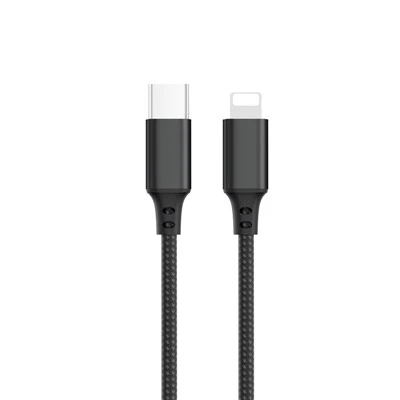
Wait, let’s clarify something else: not all cables are designed for the same use, so matching the cable to your device is part of getting the longest lifespan out of it. For example, a cable designed for fast charging (like our Type C To Type C Cable 1m, which supports up to 60W of power) should be used with fast-charging adapters and devices, but using it with a standard 5W adapter is totally fine — just don’t try to force a fast charge on a cable that doesn’t support it, because that can overheat and damage the internal wires. The technical specs on a page like our Usb C Lightning 1m are important here: that cable is designed to work with Apple devices that have USB-C ports, so plugging it into a Lightning adapter won’t work, and trying to push it might damage the connector. Knowing what your cable is rated for helps you use it correctly, which in turn makes it last longer.
I’ve talked to so many customers over the years who think that the only way to get a good cable is to pay top dollar, but that’s not always the case. You don’t need to drop $30 on a name-brand cable with fancy marketing — you just need to look for the factors we’ve covered: reinforced strain relief, durable jacket material, high-quality internal wires, sturdy connectors, and a design that matches your device’s needs. At our company, we focus on making cables that deliver that balance of quality and affordability because we know how frustrating it is to replace cables every couple of months. We’ve spent years testing our products to make sure they meet those standards, and you can check out all our options, from braided USB-A to USB-C cables to Lightning options, on our site.
If you’re tired of dealing with short-lived charging cables, we’d love to help you find the right option for your needs — whether you’re looking for a single cable for personal use, or bulk cables for your business or organization. Our team can walk you through the different specs, durability ratings, and use cases, so you can make a choice that will last. Get in touch with us to discuss your charging cable needs, and we’ll help you find the perfect fit for your devices and lifestyle.
References
- Consumer Product Safety Commission. (2021). Charging Cable Safety and Durability Testing. Retrieved from cpsc.gov/electrical-accessories/charging-cables
- International Electrotechnical Commission. (2020). IEC 62885-7: Surface Cleaning Appliances – Part 7: Charging Cable Durability Standards. Retrieved from iec.ch/standards
- Journal of Materials Science: Materials in Electronics. (2022). "The Effect of Jacket Materials on the Long-Term Durability of Charging Cables." Vol. 33, No. 15, pp. 12456-12468.
- Apple Inc. (2023). Lightning and USB-C Cable Usage Guidelines. Retrieved from support.apple.com/en-us/HT204884
- USB Implementers Forum. (2022). USB Cable Performance and Lifespan Specifications. Retrieved from usb.org/developers/technical-documents/cable-standards