

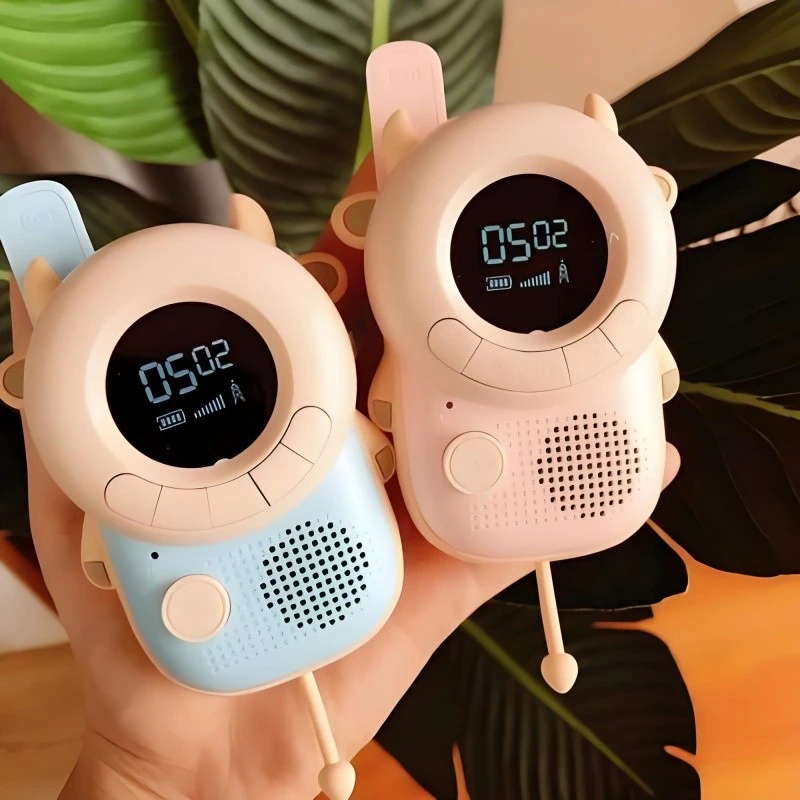
As a supplier of Junior Walkie Talkies, one question I often get asked is whether these devices can be used in different weather conditions. This is a crucial concern for parents and kids alike, as they want to ensure that the walkie - talkies can function reliably no matter the outdoor environment. In this blog post, I'll dive deep into the performance of our Junior Walkie Talkies under various weather scenarios.
Sunny and Clear Conditions
Sunny and clear days are the ideal conditions for using Junior Walkie Talkies. In such weather, there are minimal obstructions to the radio waves that the walkie - talkies rely on for communication. The absence of rain, snow, or heavy clouds means that the signals can travel more freely through the air.
Our Junior Walkie Talkies are equipped with advanced antenna technology. This allows them to send and receive strong signals even over relatively long distances in clear weather. The dry air also reduces the chances of interference, ensuring that the communication is clear and crisp. Kids can enjoy seamless conversations as they play games or explore their neighborhoods. The range of our walkie - talkies can reach up to [X] meters in ideal sunny conditions, which is quite impressive considering the small size of the devices. Parents can rest assured that their kids can stay connected even when they are a bit far apart.
Cloudy Weather
Cloudy weather doesn't pose a significant challenge to our Junior Walkie Talkies. Clouds are composed of water droplets suspended in the atmosphere, but they are not dense enough to block radio waves. In fact, the radio waves can easily pass through the clouds, just as they would through clear air.
The main factor that might slightly affect the performance in cloudy weather is the change in atmospheric conditions. Sometimes, clouds can bring with them a change in humidity. However, our walkie - talkies are designed to be resistant to moderate humidity levels. The internal components are protected by a high - quality casing that prevents moisture from seeping in. So, even on a cloudy day, kids can still use the walkie - talkies to communicate while they have fun outdoors, such as playing hide - and - seek in the park.
Rainy Weather
Rain is a more challenging weather condition for electronic devices, and Junior Walkie Talkies are no exception. Water can damage the internal components of the walkie - talkies if they are not properly protected. However, our Junior Walkie Talkies are built with a certain level of water resistance.
The outer casing of our devices is made of a durable, water - repellent material. This helps to prevent water from directly entering the walkie - talkies. Additionally, the internal circuits are coated with a special protective layer that provides an extra barrier against moisture. In light rain, the walkie - talkies can still be used for a short period without any major issues. But in heavy rain, it's advisable to limit the use or take proper precautions, such as using a waterproof pouch.
It's important to note that if the walkie - talkies do get wet, they should be dried thoroughly before further use. This can be done by gently wiping the exterior with a dry cloth and leaving the device in a well - ventilated area for a few hours.
Snowy Weather
Snowy conditions present a unique set of challenges. Similar to rain, snow is water in a different form, and it can potentially damage the walkie - talkies. However, the low - temperature environment in snowy weather also needs to be considered.
Our Junior Walkie Talkies are designed to operate within a certain temperature range. In snowy weather, as long as the temperature doesn't drop below the specified minimum operating temperature, the walkie - talkies should work fine. The snow itself might not be as much of a problem as long as it doesn't accumulate on the walkie - talkies and melt, which could lead to moisture damage.
To use the walkie - talkies in the snow, it's a good idea to keep them in a pocket or a small bag when not in use to prevent excess snow from getting on them. And again, if they do get covered in snow, carefully brush it off and dry the device before turning it on.
High - Humidity Conditions
High - humidity environments, such as in tropical regions or near large bodies of water, can also affect the performance of Junior Walkie Talkies. The high moisture content in the air can cause condensation to form inside the device over time.
Our walkie - talkies have been engineered to withstand high humidity to a certain extent. The moisture - resistant coating on the internal components helps to prevent corrosion and short - circuits. However, in extremely high - humidity areas, it's still recommended to store the walkie - talkies in a dry place when not in use. A small silica gel packet in the storage container can also help absorb any excess moisture.

Windy Conditions
Windy weather generally has little direct impact on the performance of Junior Walkie Talkies. The radio waves are not affected by the wind itself. However, the wind can cause background noise when speaking into the walkie - talkie. This might make it a bit more difficult for the other person to clearly hear the message.
To overcome this issue, kids can try to turn their backs to the wind when speaking or cup their hands around the microphone to reduce the wind noise. Our walkie - talkies also have built - in noise - cancellation features to some degree, which can help filter out some of the background noise.
As a supplier, I'm proud to offer Junior Walkie Talkies that are versatile and can handle a variety of weather conditions. But like any electronic device, proper care and usage are essential for optimal performance. If you're interested in enhancing your kids' outdoor adventures with our reliable Junior Walkie Talkies, or if you're looking for other creative gadgets, feel free to explore our product range. You can find out more about our Junior Walkie Talkies by visiting Junior Walkie Talkies. We also offer other exciting products such as the Mini Camera Body Cam, Hd Thumb Camera, Soft Silicone Night Light and Led Silicone Night Light.
If you're considering a bulk purchase for schools, camps, or any other group activities, we're more than happy to discuss the details with you. Reach out to us to start a conversation about how we can meet your needs.
References
- [List of scientific research on radio wave propagation under different weather conditions]
- [Technical documentation of our Junior Walkie Talkies]