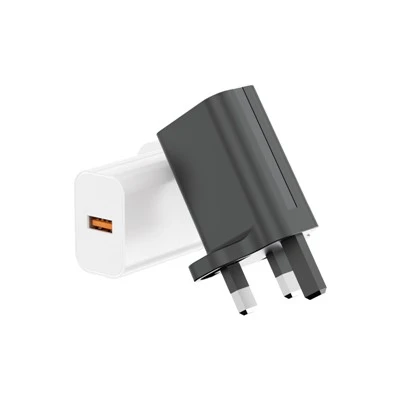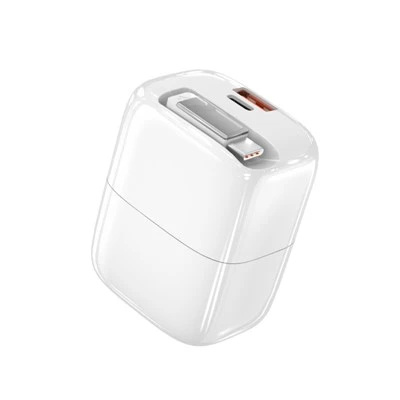


We know that the rated voltage for domestic household use in China is 220V, which cannot be directly used to charge mobile phones. The purpose of a mobile phone charging dock is to convert the high-voltage pulse of 220V into a low-voltage pulse of 5V, and then, through a rectification and voltage regulation circuit, into a stable 5V DC power. In other words, the charging dock acts as a converter from high-voltage AC to low-voltage DC.
However, directly plugging the phone charging dock into a wall socket will not generate any current. The charger will only start working when the phone is connected. The current depends on the load: as long as it is within the charger's capabilities, it will provide the maximum current required by the load. If the current required by the load exceeds the charger's maximum capacity, the charger will continuously output that maximum current. This is because chargers typically have internal protection circuits. If the output current is too high, a protection mechanism will be triggered, stopping the current output to prevent danger. That is, even if the charger can output 50A, if your phone's internal charging logic is set to 2A, the charging current will still be limited to 2A, and the charging speed will not be significantly affected.