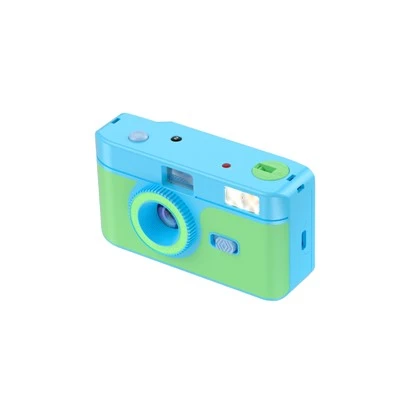


Children's cameras are photography tools designed specifically for children, typically combining fun elements with basic photography functions to help children record their lives and cultivate their observation skills.
The core principle of children's cameras is similar to that of ordinary digital cameras: they capture light through an optical lens, convert it into digital signals via an image sensor, and then process it before storing it on a storage medium (such as a TF card). Their technological highlights lie in optimizations for children's usage scenarios: for example, they use a 64-megapixel sensor to output clear photos, meeting daily recording needs; they support continuous shooting to easily capture moving scenes; they have a built-in photo booth mode with stickers and filters to increase fun; some models also include game functions to enhance interactivity. Furthermore, bilingual (Chinese and English) announcements can assist children in language learning, combining educational and entertainment value.